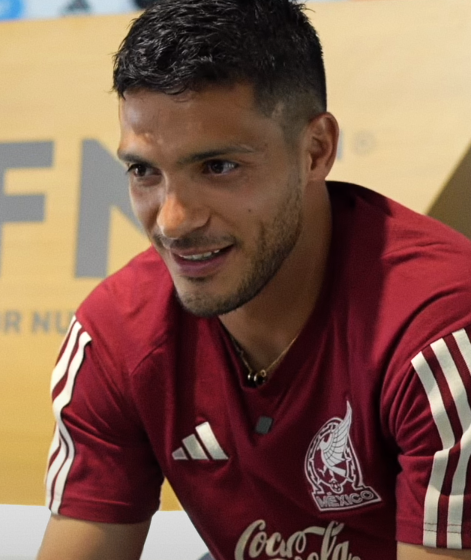

Raul Jimenez was visibly overcome with emotion after he headed in Mexico’s second goal in the opening game of the FIFA World Cup 2026 against South Africa. The goal sealed a vital win for El Tri to kick off their campaign, but the fans inside the Azteca Stadium were witnessing something more than that.
Six years ago, Jimenez lay unconscious on the pitch after a sickening head clash with David Luiz during a game between Wolves and Arsenal at the Emirates Stadium. His colleagues, manager, and family were left fearing the worst as the paramedics tried to give him oxygen on the pitch. Jimenez was carried off; later it was revealed that he suffered a skull fracture.
The man who grew up in Tepeji del Rio survived. The road back was going to be painful and long, and it wasn’t even clear whether he would return to the game, let alone be the same marksman that made him a hero at Wolves.
Before this horrific injury, Jimenez scored 17 league goals in the 2019-20, adding to the 13 league goals a season earlier for the West Midlands club in his debut campaign. After the skull injury, his footballing future was in darkness. For six months, he trained alone, every day a step forward to getting back on the pitch. He didn’t play for the Molineux club for eight months.
He then scored his first goal after the injury in September 2021, a winner in the 1-0 victory at Southampton. Two years later, he moved to Fulham but will return to Wolves in the upcoming season.
Raul Jimenez’s childhood head injury and Tepeji roots
A head injury, especially for a striker, can take the sting out of their game when they eventually return. There could be self-doubts over whether they would be willing to make the jump to win a header, get into a crowd of defenders, and endure the physical challenges of the game. But Jimenez was not going to give up. He had of course recovered from a childhood accident that left him with a head injury.
Growing up in the streets of Tepeji del Rio, Jimenez didn’t play in the local league’s well-reputed youth divisions. But he cut his footballing teeth in the city, scoring goals for fun and then going through a scary accident.
He would often play with his cousins on a small field in the city and was used to playing without goalposts. But on a fateful day, somebody had set up a goal using three cement posts. Jimenez, enthusiastic as always, scored a goal and then celebrated by jumping and hanging on the crossbar of the makeshift goal.
The cement post fell on his head, and he was left bleeding. Jimenez recovered but was left with a scar on the right side of his forehead that he carries to this day.
He remains connected to his childhood and the memories of Tepeji. A few years ago, he FaceTimed a nine-year-old boy in Tepeji after the kid was involved in a serious bicycle accident. Despite experiencing the riches of European football, he hasn’t forgotten his roots.
Raul Jimenez’s World Cup goal means so much more
Just as his childhood injury had marked him, his skull fracture six years ago means he has to wear headgear for the rest of his playing days. Premier League and Mexico fans are used to seeing him in the gear, and since his return from injury, the 35-year-old striker has scored 68 Premier League goals in 233 appearances.
He has shown he has not lost any of his ruthless touch, but he arrived at the 2026 World Cup with a chip on his shoulder. In the three previous tournaments, he had failed to make his mark despite growing at a club level. In 2014, he was more of a squad player and made just one substitute appearance in the game against Brazil.
Four years later in Russia, he made three more appearances from the bench but failed to find the back of the net. In Qatar, further substitute appearances were added to his name, but his name remained absent from the scoresheet.
As destiny would have it, his first goal in a World Cup came in front of his home fans at a colorful Azteca. In a poetic moment, he leapt to meet Roberto Alvarado cross with a thumping header to secure Mexico’s win over Bafana Bafana. Jimenez pointed to the sky after scoring, likely a tribute to his late father, who passed away in March. His teammates jubilantly celebrated with him, and Jimenez was overcome with emotion, with tears clearly visible.
Raul Jimenez’s comeback is more than a personal story of resilience; it is the 2026 World Cup‘s first story and perhaps its biggest.