
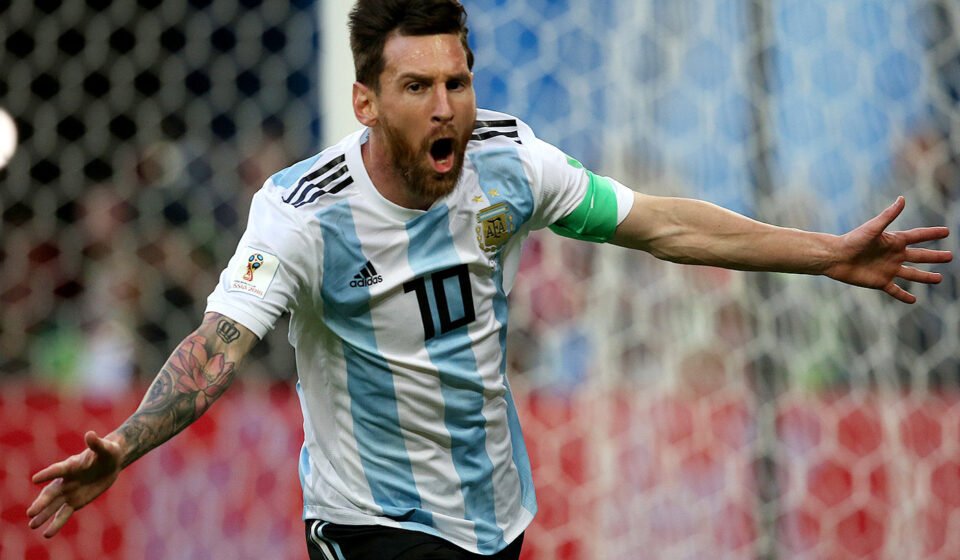

When Lionel Messi curled a finish past Austrian goalkeeper Alexander Schlager in Argentina’s Group J clash, the moment became immortal. This was Messi’s fourth goal at this year’s tournament, and it made him the highest scorer in World Cup history. He moved past German Miroslav Klose’s 16-goal tally and then netted another one late in stoppage time to move two clear.
For years, the World Cup had been a source of pain for perhaps the greatest footballer of all time. Yet, ever since conquering his final frontier in Qatar four years ago, he has making the stage his own. A hat trick against Algeria to start off this World Cup underlined that he will once again be a talisman for his side as they seek to defend their crown.
Then the performance against Austria in Dallas helped his team take one step further in that quest and made him the most prolific goal scorer in the tournament’s long and illustrious history. Curva Global takes a look at how Messi reached this record right from his first World Cup goal in 2006 to his latest two decades later.
World Cup 2006: Lionel Messi arrives
An 18-year-old Lionel Messi tip-toed onto the World Cup stage for the first time in 2006 in Germany. He did not feature in Argentina’s opening game win against Ivory Coast but made his World Cup debut in the second match. He came on in the second half and scored his first goal on the global stage as the South American side dismantled Serbia & Montenegro 6-0, with Messi also providing an assist.
He made two more appearances for his country at the tournament but didn’t add to his solitary goal. Argentina went out on penalties to the hosts in the quarterfinals after a 1-1 draw.
Three appearances. One goal and one assist
World Cup 2010: A blank
Messi arrived at the 2010 World Cup with a burgeoning reputation as the game’s best player. He had guided to immense success, winning the Champions League a year earlier. He was prolific; he was weaving magic and was expected to lead his country’s charge for glory in South Africa.
What added to the drama was that legendary Diego Maradona was in charge of the national team. With Messi on the pitch and Maradona guiding from the sidelines, it was fairytale stuff for football romantics. But reality hit different.
La Albiceleste did well to win all three group games to secure a passage to the last 16, but Messi couldn’t find the back of the net. They beat Mexico 3-1 in the next round, and this time La Pulga got an assist. This set up a quarterfinal showdown with Germany once again, and history repeated itself. Maradona could only watch as Messi appeared helpless with the Germans running riot in a 4-0 win. There was more pain to come for Messi and Argentina at the hands of Die Mannschaft.
Five appearances. No goals and one assist.
World Cup 2014: Golden Ball for golden La Pulga
Many will argue that Messi was at the peak of his powers when the World Cup arrived in South America with Brazil as hosts. He was the captain of his team, and with a strong core of players around him, there was a belief they could all the way. Messi started the tournament with a goal against Bosnia and Herzegovina.
He followed it up with a stoppage-time winner against Iran, and two more goals came against Nigeria in the final group game. He was then instrumental in his side’s extra-time win over Switzerland in the round of 16, providing an assist. But his form deserted him in the rest of the knockout games, and he didn’t add to his tally.
Still, Argentina made it to the final, where their nemesis, Germany, awaited them. The campaign ended in more misery for Messi as he failed to inspire his country to a first World Cup win since 1986. The European won the game 1-0.
Seven appearances. Four goals and one assist.
World Cup 2018: Messi comes back from retirement
The World Cup 2014 final defeat was followed by two Copa America final losses, both to Chile. This led to Messi announcing his retirement in 2016, but after a nationwide campaign, he reversed the decision. He helped his team reach the World Cup in Russia, scoring a hat trick in their last qualifying game.
But the team came in the tournament with more hope than expectation. An opening game draw against Iceland saw their talisman not looking in his best form. A blank in the 3-0 defeat against Croatia followed. However, he did manage to score against Nigeria to help his team reach the next round.
The last 16 encounter against favourites France proved to be a chastening experience. An open game saw Les Bleus run out 4-3 winners with Messi providing two assists but not getting among the goals as the World Cup dream ended one more time.
Four appearances. One goal and two assists.
World Cup 2022: The magician at his best
In 2022, Lionel Messi made the World Cup stage his own. The same stage that had been the source of humiliation and agony in the past was turned into a monument of immortality by the man from Rosario.
He scored a penalty in the opening game, but Argentina fell to a shocking 2-1 defeat to Saudi Arabia. He then scored again as his side beat Mexico by two goals to nil in the second game. A win over Poland meant they were through to the last 16.
Messi was on the scoresheet again as La Albiceleste overcame a stubborn Australian side. In the quarterfinal against the Netherlands, he scored one and assisted one and also bagged one in the penalty shootout win. The semifinal match against Croatia saw him repeat the trick with a goal and assist to lead his side into the final.
Then in one of the greatest World Cup finals of all time, Messi shone with all his brilliance against France. He first scored a penalty to put side ahead before scoring again in extra time. Eventually, a penalty shootout win gave Argentina their third World Cup crown, and Lionel Messi had his holy grail.
Seven appearances. Seven goals and three assists.
World Cup 2026: Record breaker
It was widely believed that after winning the World Cup in Qatar, Lionel Messi would call it a day and end on a high. But he looks far from being done. After leading his side to a second successive Copa America title, he arrived at the 2026 World Cup, eyeing more history.
The opening game saw him net a hat trick against Algeria, making it clear that he is not ready to give up his crown. Then the match against Austria saw him score twice to surpass Germany’s Miroslav Klose to become the highest goal scorer in World Cup history with 18 goals to his name.
We would expect to add to this tally before all is said and done at this year’s World Cup, and don’t be surprised if Messi once again has the last say.
Two appearances. Five goals.
Lionel Messi World Cup goals: 18.